 Padua City Guide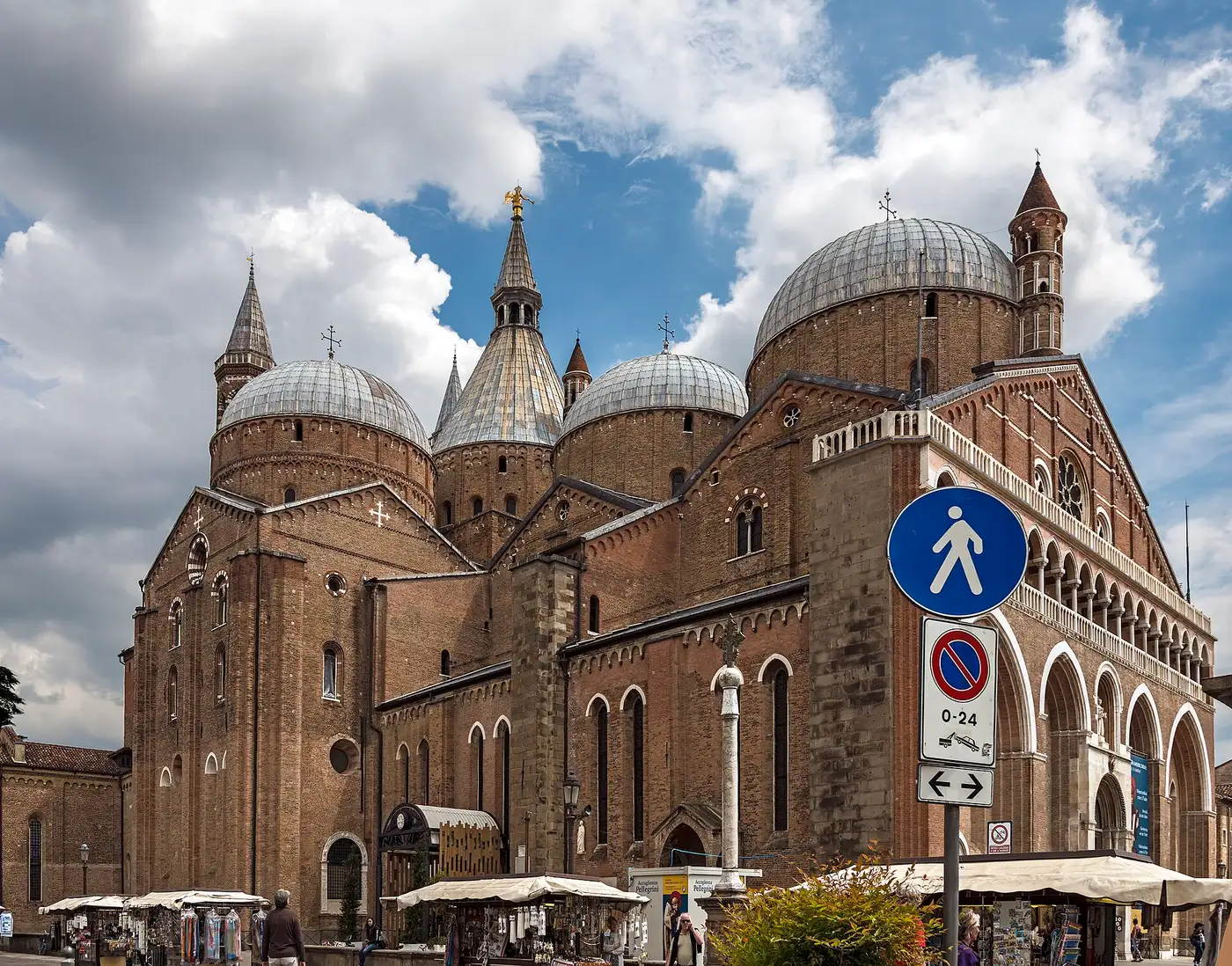
The basilica of saint anthony padua — known to every Paduan simply as il Santo — is the city's great pilgrimage church, raised over the tomb of the Franciscan who died here in 1231 and run ever since by Franciscan friars as a pontifical basilica. Pilgrims come for the tomb in the lower church and the Chapel of the Relic; everyone else comes for Donatello, whose bronze crucifix, Madonna col Bambino and six narrative reliefs around the high altar, together with the Gattamelata equestrian monument outside, make this one of the densest Renaissance sculpture ensembles in Italy. Entry is free and the basilica opens at 6:15 every day of the year, so the only real decisions are the dress code (covered shoulders and knees, enforced) and whether to add the museum complex ticket (€10.00) for the Oratorio di San Giorgio and the Tesoro chapel. Hours, services and ticket details below were checked on santantonio.org on 12 September 2026. The basilica anchors the southern loop with Prato della Valle and the botanical garden; everything else the city offers starts from the Padua City Guide homepage.
Quick answer Free entry, hours, the tomb, Donatello and the museum ticket
Checked on 12 September 2026: entry to the basilica is free and it opens daily at 6:15, closing at 18:45 solar time — on weekdays during daylight saving the close shifts to 19:25. Shoulders and knees covered, no flash, and tourist visiting pauses during Mass; the friars publish the current Mass schedule on santantonio.org. The tomb of St Anthony is in the Lower Basilica; the Chapel of the Relic holds the saint's relics, the venerated tongue among them. Donatello's bronzes — the crucifix, the Madonna col Bambino and six reliefs of scenes from the saint's life — fill the high altar area, with the Gattamelata monument outside. The museum complex single ticket (€10.00 full, €7.00 reduced, €20.00 family) covers the Tesoro chapel, the Oratorio di San Giorgio and the Scoletta. Fold the stop into a southern loop with Prato della Valle and the botanical garden, or let padua in 1 day do the sequencing.
Key takeaways
- Free entry, open daily from 6:15; close 18:45 solar time, 19:25 on weekdays in daylight saving.
- Dress code enforced: shoulders and knees covered; no flash photography anywhere inside.
- The tomb of St Anthony sits in the Lower Basilica; the Chapel of the Relic keeps his relics, tongue included.
- Donatello's basilica programme: bronze crucifix, Madonna col Bambino, six miracle reliefs — plus the Gattamelata outside.
- Museum complex ticket €10.00 / €7.00 / €20.00 family adds the Tesoro, Oratorio di San Giorgio and Scoletta.
Key facts
Opening hours
| Basilica, daily | 06:15–18:45 |
|---|---|
| Weekday close during daylight saving time | 06:15–19:25 |
Closed Open every day of the year; the 18:45 solar-time close shifts to 19:25 on weekdays during daylight saving; tourist visiting pauses during Mass — the friars publish current Mass times on santantonio.org
Admission
- Adult
- Basilica free; museum complex of the Basilica (Tesoro, Oratorio di San Giorgio, Scoletta) single ticket €10.00
- Reduced
- Museum complex €7.00; family ticket €20.00
- Free
- Basilica entry free for everyone; Masses and the tomb are free
Planning it
- Time needed
- 45-60 minutes in the basilica; 60-90 minutes with the museum complex
- Book ahead
- Optional — walk-up usually fine
- Address
- Piazza del Santo, 35123 Padova
A pontifical basilica raised over the saint's tomb
Anthony of Padua — born in Lisbon, a Franciscan preacher of European fame — died in Padua on 13 June 1231, and the city's response to his death was immediate: he was canonised in 1232 and work on the present church began the same year, on a site at the city's western edge chosen so that the tomb could remain a place of pilgrimage from the day it was sealed. The Franciscan friars have governed the complex ever since, and its status as a pontifical basilica means it stands outside the diocese's chain of command — one of the reasons the building's administration, publications and ticketing all run through the friars' own site, santantonio.org.
Architecturally the basilica refuses to sit still. The body is brick Gothic, austere and tall, but the roofline carries a cluster of domes that reads almost Byzantine, and the interior accumulates side chapels like sediment — most famously the Cappella del Santo, the dark lower church where the tomb sits. What you notice on approach is the silhouette: domes and towers over a long brick mass at the head of Piazza del Santo, with Donatello's bronze Gattamelata standing on its pedestal in the open square — the first large-scale equestrian bronze of the Italian Renaissance, and the photo every visitor takes before the door.
- 1231: Anthony dies in Padua on 13 June; his tomb becomes an immediate pilgrimage site.
- 1232: canonisation, and the start of work on the present basilica.
- Franciscan governance: the complex is run by the friars as a pontifical basilica.
- 15th century: Donatello's altar bronzes and the Gattamelata monument transform the church and its square.
- Today: open daily 6:15-18:45 (19:25 weekday close in daylight saving), entry free.
Inside: the tomb, the relic chapel and Donatello's bronzes
Work the interior in the pilgrims' order, because it is also the efficient order. The lower church — entered by steps from the nave — holds the Cappella del Santo, the chapel built directly over the tomb: a low, sombre space where the marble tomb-chest stands at the centre, polished by centuries of pilgrims' hands and ringed with written messages left around the rails. The queue moves; the atmosphere is devotional rather than touristic, and photographs without flash are tolerated so long as they stay unobtrusive. From the tomb, the Chapel of the Relic next door keeps the basilica's sacred inventory — the saint's relics, with the incorrupt tongue venerated at their centre, displayed in gold reliquaries that repay ten slow minutes.
Up in the main church, the high altar area is the Renaissance payload. Donatello worked on the basilica's altar programme through the 1440s: a monumental bronze crucifix, a seated Madonna col Bambino of disarming tenderness, figures of the patron saints, and six bronze relief panels narrating the miracles of St Anthony — among the first narrative bronze reliefs of the Renaissance. Outside, on the piazza, the Gattamelata monument to the condottiere Erasmo da Narni rounds out the commission: cast in the 1440s and 1450s, it revived the ancient equestrian bronze for the modern age. Give the ensemble a deliberate half-hour; it costs nothing.
The Donatello programme at a glance
All of the works below belong to the basilica itself and are covered by free entry — only the museum complex costs money.
| Work | Where | What to notice |
|---|---|---|
| Bronze crucifix | High altar area | Cast in the 1440s for the basilica; the body's weight and asymmetry mark it as Donatello's |
| Madonna col Bambino | High altar area | The seated Madonna — humbler and more human than any Madonna in the city's painting |
| Six miracle reliefs | High altar area / choir | Scenes from the life and miracles of St Anthony; pioneering perspective in bronze |
| Gattamelata | Piazza del Santo, outside | Equestrian monument to Erasmo da Narni, cast 1440s-1450s; free to view at any hour |
Masses, silence and etiquette
This is a working sanctuary with a daily religious schedule, so tourist visiting pauses during services. The friars publish current daily and Sunday Mass times on santantonio.org — check them the night before rather than guessing. Inside, keep voices low around the tomb chapel, switch phone screens off, and dress for an Italian church: shoulders and knees covered, in summer as in winter, and the rule is enforced at the door.
No flash in any part of the complex; the museum complex areas have their own photo rules posted at their entrances.
The museum complex ticket: Tesoro, Oratorio and Scoletta
The single museum ticket (€10.00 full, €7.00 reduced, €20.00 family) unlocks three spaces grouped around the basilica, and it is worth the money if you care about fourteenth-century painting. The Tesoro chapel and its museum keep the basilica's treasury and liturgical objects. The Oratorio di San Giorgio next door is a small brick hall frescoed floor to ceiling with the stories of St George and other saints by Altichiero and his circle — one of the densest surviving late-fourteenth-century fresco rooms in the Veneto. The Scoletta del Santo, the old hall of the confraternity beside the oratory, adds early-sixteenth-century fresco scenes from the saint's life, including three panels by the young Titian.
Buy at the museum complex desk on the north side of the piazza; the ticket covers all three sites in a single visit or, if your timing slips, across the days the complex is open — check the exact validity on santantonio.org when you buy. Seen at a reasonable pace it takes sixty to ninety minutes on top of the basilica, so start with the free church and add the ticket only if the Oratorio's frescoes are your kind of thing.
- Tesoro: treasury chapel and museum of liturgical objects.
- Oratorio di San Giorgio: Altichiero's fresco cycle — the ticket's headline sight.
- Scoletta del Santo: confraternity hall with scenes from St Anthony's life, three of them by the young Titian.
- Single ticket €10.00 full / €7.00 reduced / €20.00 family; details on santantonio.org.
Entry options around il Santo as published on the basilica's official site (santantonio.org), checked on 12 September 2026. The basilica itself is free with no booking; the only paid option on site is the museum complex single ticket, and the tour rows are optional guided departures from our catalogue.
Visit the basilica free of charge; add the €10.00 museum complex ticket only if the Oratorio di San Giorgio frescoes are a priority for you.
| Option | What it covers | Price | Booking | Book |
|---|---|---|---|---|
| Basilica entryEveryone | Nave, lower church, tomb chapel, Chapel of the Relic, Donatello bronzes — within opening hours | Free | Official basilica site | Official site |
| Museum complex of the BasilicaPainting lovers | Tesoro chapel and treasury + Oratorio di San Giorgio + Scoletta del Santo | €10.00 full / €7.00 reduced / €20.00 family | Official basilica site | Official site |
| St Anthony's life tour of the basilica and Antonian sitesPilgrims and depth-seekers | See tour card for departures | See tour card | Check Availability | Check Availability |
| Guided Padua city walk including the Santo quarterFirst-day visitors | See tour card | See tour card | Check Availability | Check Availability |
Free and ticketed around the Santo
Figures come from the basilica's own site (santantonio.org) and the linked institutions' pages, checked on 12 September 2026. Use the table to split the southern loop between what costs nothing and what deserves the ticket.
| Site | Entry | Highlight | Time needed |
|---|---|---|---|
| Basilica (this page) | Free | Tomb of St Anthony, relic chapel, Donatello bronzes | 45-60 min |
| Museum complex ticket | €10.00 / €7.00 / €20.00 family | Altichiero's Oratorio di San Giorgio frescoes | 60-90 min |
| Gattamelata monument | Free, outdoor | Donatello's equestrian bronze on the piazza | 5 min |
| Abbey of Santa Giustina | Free | Veronese altarpiece and the tomb of St Luke | 30-45 min |
| Botanical garden | Ticketed — see its page | UNESCO garden of 1545, Goethe's palm | 1.5-2 h |
Il Santo from Piazza del Santo — brick Gothic under the dome cluster that defines Padua's southern skyline.
The Santo quarter on the map
The basilica heads a compact southern cluster: the museum complex on the piazza's flank, the giant square two minutes south, the garden and abbey beyond it. Pins cover the whole loop.
Guided tours that cover the Basilica of Saint Anthony
The basilica tells its stories better with a guide, and the Antonian sites scatter more than most. These catalogue departures handle both.
 from $148.82
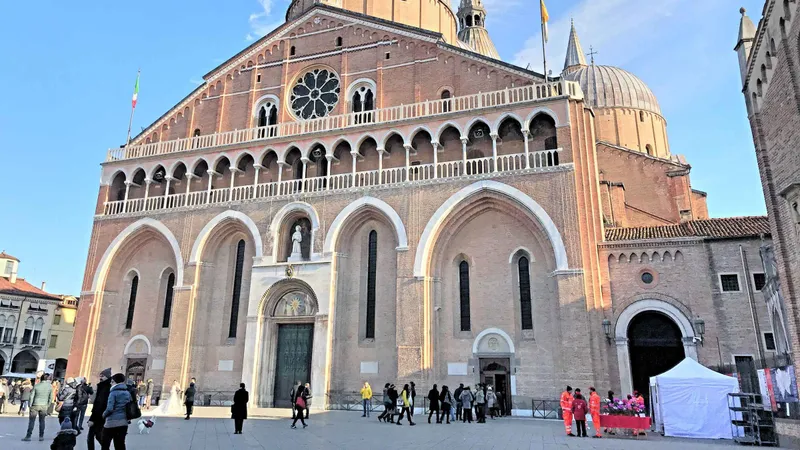
Padua: St Anthony's Life Tour with Self-Guided Camposampiero Visit
The pilgrim-depth option for Saint Anthony devotees
Check Availability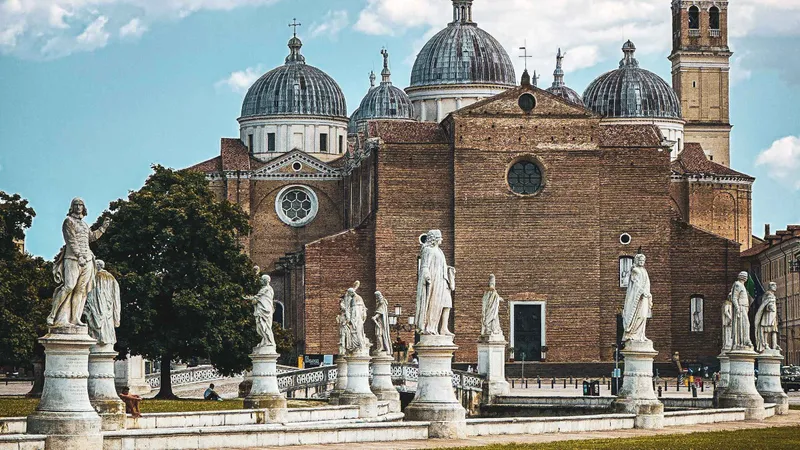 from $69.61
Padua: Experience Padova Like a Local – Guided Tour
The local-life pick: squares, alleys, and a tasting at Pedrocchi or the market
Check AvailabilityPrices, ratings and details are the platform's own, checked in Q3 2026; dollar figures are the listed prices — the platform bills in your account's currency.
Frequently asked questions about the Basilica of Saint Anthony
Is the Basilica of Saint Anthony free to enter?
Yes — entry to the basilica is free, with no ticket and no booking, during opening hours. The only paid element on site is the museum complex single ticket (€10.00 full, €7.00 reduced, €20.00 family) covering the Tesoro, the Oratorio di San Giorgio and the Scoletta.
What are the basilica's opening hours?
The basilica opens daily at 6:15 and closes at 18:45 solar time; on weekdays during daylight saving time the close moves to 19:25. It is open every day of the year, with tourist visiting pausing during Masses — the friars post the current schedule on santantonio.org.
Is there a dress code at il Santo?
Yes, and it is enforced: shoulders and knees covered, as in Italian churches generally. Carry a scarf or light shirt in summer. Photography without flash is tolerated in most of the church, but keep cameras unobtrusive around the tomb chapel and follow the posted rules in the museum areas.
Where exactly is the tomb of Saint Anthony?
In the Cappella del Santo in the lower church. The marble tomb-chest stands at the centre of the chapel; pilgrims queue to approach it, and written messages are left around the rails. The Chapel of the Relic beside it keeps the saint's relics, including the venerated tongue.
What did Donatello make for the basilica?
Through the 1440s he created the bronze crucifix, the seated Madonna col Bambino, the saint figures and six narrative reliefs of St Anthony's miracles for the high altar area, and outside the piazza the Gattamelata equestrian monument to Erasmo da Narni. All of it is covered by the free basilica visit; only the treasury museum is ticketed.
Is the museum complex worth the €10.00?
If late-fourteenth-century fresco is your interest, unambiguously yes: the Oratorio di San Giorgio is one of the Veneto's densest surviving cycles, and the Scoletta adds three early scenes by the young Titian. If you are sightseeing at surface level, the free basilica plus Gattamelata will fill an hour without it.
How do I combine the basilica with the rest of southern Padua?
Walk: Prato della Valle is two minutes south, the botanical garden beyond its eastern curve, the abbey of Santa Giustina on the square's southern rim — a two-to-three-hour loop with no transport needed. For the wider connections, our getting around guide covers the bus and tram options from the station.
What to visit near the Basilica of Saint Anthony
The basilica is the northern anchor of Padua's southern cluster — all of this is within ten minutes on foot:
Prato della Valle
Italy's largest square, with the canal ring and the 78-statue island, two minutes south.
Botanical garden
The UNESCO garden of 1545, east of the square — ticketed, book ahead in season.
Abbey of Santa Giustina
The colossal free abbey church with St Luke's tomb, across the square.
Padua in 1 day
Sequencing the basilica, the square and the centre into one route.
Where to eat
Trattorias and bacari between the Santo quarter and the old town.
Reviewed Q3 2026 (July–September 2026); next review Q4 2026. Prices, hours and terms are set by the venue or operator and confirmed at checkout.
We may earn a commission if you book through one of our links, at no extra cost to you. Full affiliate disclosure