 Padua City Guide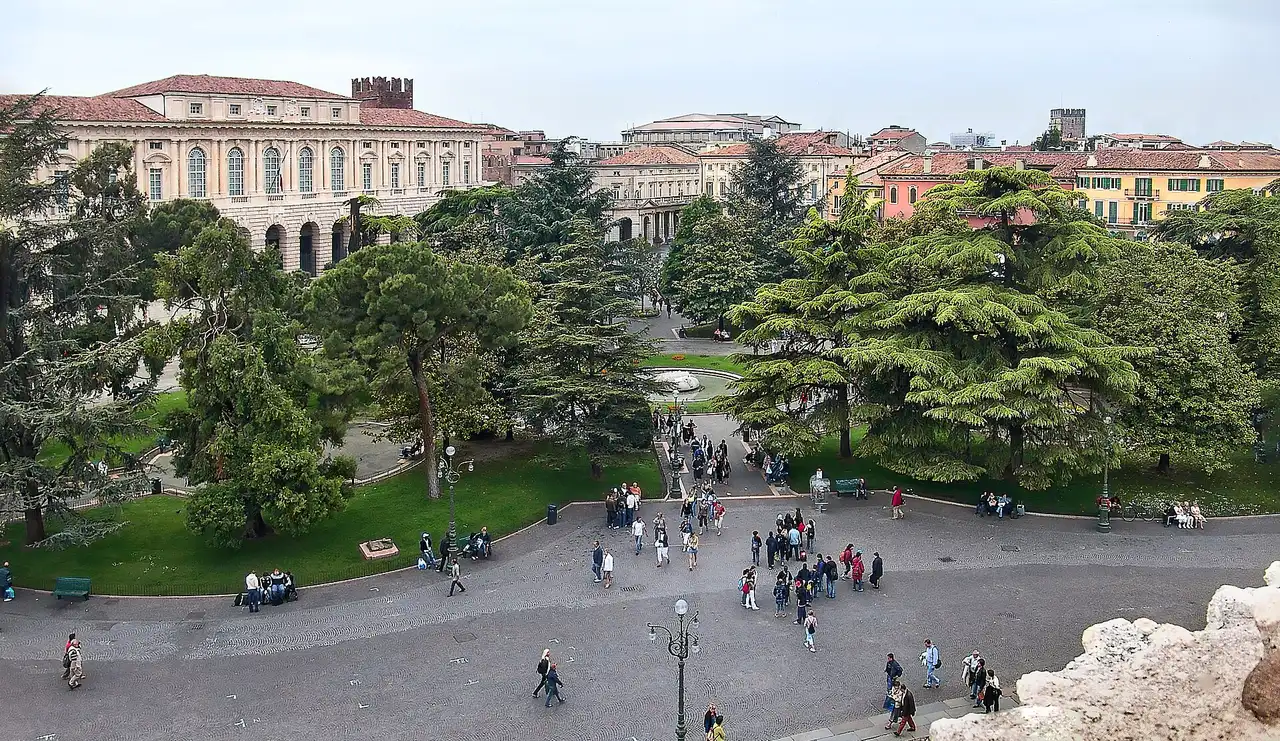
A verona day trip from padua trades the lagoon for the Romans: a direct regional train covers the 70-90 minutes west roughly every hour for about €8, with no reservation and a station — Verona Porta Nuova — that sits a flat 20-25 minute walk from the arena gates. Verona is the most self-contained of the Padua rail trips: the entire old town folds into a tight loop inside the river bend, the Roman arena fronts a nineteenth-century piazza the size of a stadium forecourt, and the evening option — opera in a first-century amphitheatre — exists nowhere else on this rail map. The opera festival runs from late June into early September, with tickets from roughly €25 on the stone steps; by day, entry to the arena runs around €10. This page covers the train mechanics, the day-versus-opera decision, Juliet's courtyard etiquette, and an honest note on tours: nobody runs coaches here from Padua, so the wine-country alternatives in the catalogue stay in the hills near home. For the sibling trip east, the Venice day trip planning page picks up the lagoon; for the rest of the directory, the Padua City Guide homepage holds the index.
Quick answer Train times, arena day versus opera night, and the walking loop
Checked on 12 September 2026: the train covers Padua to Verona in 70-90 minutes for about €8, roughly hourly, no reservation. Daytime Arena entry runs about €10; in opera season (late June-early September) tickets start around €25 and the amphitheatre at night is the better show. The old town is a flat triangle — Porta Nuova, the Arena, Verona's own market square, the river — all on foot. Wine vans from Padua do not reach Verona: the nearest guided tastings are the Euganean and prosecco days (padua tours).
Key takeaways
- Hourly regional trains, fixed ~€8 fare, no reservation — buy on the day.
- Arena by day ~€10; opera nights from ~€25 in late June-early September.
- The old town is a flat loop: station to Arena in 20-25 minutes on foot.
- Juliet's courtyard is free to enter but shoulder-to-shoulder by midday; the house interior is paid.
- Padua's tour vans do not serve Verona — go by rail and book opera seats separately.
Key facts
Opening hours
| Padova → Verona regional trains (daily) | roughly hourly through the day–evening returns are limited — check the last departure before an opera night |
|---|---|
| Arena daytime visits | daytime slots on most days–earlier closing on opera days — check the official calendar |
Closed Trains run daily; the Arena closes or shortens hours for individual events and opera rehearsals, so confirm the day's slots on arena.it
Admission
- Adult
- Regional train ~€8 one way; Arena day entry around €10; opera tickets from roughly €25 (unreserved stone steps cheapest)
- Reduced
- Arena day-visit reductions for students and seniors; opera pricing varies by section — both per arena.it
- Free
- Piazza Bra, the Adige riverside and bridges, Verona's own market square, and peering into Juliet's courtyard from the arch
Planning it
- Time needed
- 9-13 hours (longer on opera nights)
- Book ahead
- Recommended — a few days
- Address
- Piazza Brà 1, 37121 Verona
The train: Padova to Verona in 70-90 minutes
Regional trains leave Padova Centrale for Verona roughly every hour through the day, riding the same Milan-bound line that passes Vicenza about halfway out. The fare is fixed at about €8 each way, there is no seat reservation, and the journey runs 70-90 minutes depending on stops — long enough for a coffee, short enough to make an early start painless. Validate paper tickets in the green machines before boarding; the same rule applies here as on every regional line out of Padua.
You arrive at Verona Porta Nuova, a through-station with a front hall of ticket machines and local buses. The old town begins immediately: walk straight out of the station forecourt and keep going — the flat 20-25 minute approach crosses the boulevard and enters the old grid at the Borsari gate district, or you can hop a local bus along Corso Porta Nuova if the bags or the heat argue otherwise. Coming home, check the last convenient regional before settling into dinner: the frequency thins in the evening, and opera nights end late enough that the timetable decides the plan. A useful option en route: Vicenza sits on this same line 30 minutes out of Padua, so a stopover there on the way back is a legitimate variation — see the Vicenza day trip page.
- Roughly hourly regional trains, 70-90 minutes, fixed fare about €8 each way.
- No reservation, open seating — validate paper tickets before boarding.
- Porta Nuova station to the Arena: a flat 20-25 minute walk or a short ride along Corso Porta Nuova.
- Evening frequency thins — confirm the last regional before booking an opera night.
- Vicenza lies on the same line: a 30-minute stopover on the return is a workable bonus.
The Arena: daytime visit or opera night
Verona's Roman amphitheatre is the reason the trip exists, and it works in two completely different modes. By day it is architecture: a first-century bowl whose outer ring survives in a four-storey arc of pink-tinged limestone, climbable across the tiered seating with the Piazza Bra rooftops on one side and the old town on the other. Day entry runs around €10, the visit takes 45-60 minutes, and the morning slots are the quiet ones. By night, from late June into early September, the same tiers fill with the opera festival — a real festival with full productions, not a pasta-and-tenors pastiche — where tickets from roughly €25 buy an unreserved place on the stone steps and a candlelit queue outside the arches that is itself worth the fare.
The two modes are not interchangeable, and the right answer depends on the calendar: on opera days the daytime visits close early for rehearsals, so check arena.it for the day's slots before locking the plan. If you choose the night, bring or hire a seat cushion (the stone steps are genuine stone), expect the performance to end late, and verify the return train before you buy — the honest fallback is a later arrival home or, in festival peaks, a night in Verona's own hotels. The daytime visit needs none of that logistics and pairs cleanly with the rest of the old town loop below.
Juliet's courtyard and the house
The Shakespeare industry runs at full volume on Via Cappello. The courtyard itself is free to look into from the arch — enough for the balcony photograph if you accept elbows — while the house interior and the balcony access are paid. Crowd discipline matters more than timing precision: before 10:30 or after 17:00 the queue shrinks to a few minutes, midday it can eat half an hour for a ninety-second photo.
Treat it as a two-minute stop, not a pilgrimage, and the old town keeps moving.
Castelvecchio, the river and the Roman theatre
On the west edge stands Castelvecchio, the Scaliger fortress with a crenellated bridge over the Adige; the museum inside (Scarpini's 1920s restoration is half the show) is paid, in the region of €7 — confirm on site. Cross the river for the Roman theatre on the far bank and climb to the Castel San Pietro terrace, the free viewpoint that photographs the whole bend. Torre dei Lamberti, near the market square, sells a paid lift to the highest view if the legs prefer a lift to a hill.
The old town loop in five stops
Everything sits inside one flat triangle. Walk it in this order and you cross the city twice at most:
| Stop | What it is | Entry | Time |
|---|---|---|---|
| Arena di Verona | First-century Roman amphitheatre on Piazza Bra | ~€10 day entry | 45-60 min |
| Juliet's House | Courtyard, balcony and house on Via Cappello | Courtyard free to view; interior paid | 15-30 min |
| Verona's market square (Piazza delle Erbe) | The old forum, frescoed facades and daily stalls | Free to walk | 20 min |
| Torre dei Lamberti | Medieval tower with a paid lift | Paid | 30-45 min |
| Castelvecchio and bridge | Scaliger fortress, museum and crenellated river bridge | Museum ~€7 — confirm | 1 hour |
Arena day visit vs opera night vs both
Prices and the season window come from the Arena Foundation's own pages, checked on 12 September 2026; pick a row based on how much of the old town you still want on foot afterwards.
| Plan | When | Cost | Best for |
|---|---|---|---|
| Daytime visit | Most days; daytime slots (shortened on opera days) | ~€10 | Architecture, photography and a full old-town loop |
| Opera night | Late June-early September | From ~€25 (unreserved stone steps) | The once-per-summer performance under the arches |
| Day visit + opera | Opera-season days | ~€10 plus the opera ticket | Full value from a single long day — book the day slot for early afternoon |
| Skip the Arena | Any day | Free | Riverside walks, the market square and the views on a short stop |
Official rows first: the Arena Foundation's desks and the city's civic sites, checked on 12 September 2026. One reality check before the tour rows — GetYourGuide runs no Verona departures from Padua, so the wine options listed are the nearest guided alternatives in the hills around Padua, not Verona trips.
Buy Arena and opera tickets direct from the official site; everything else in the old town can be decided on the day.
| Option | Where | Price | Action | Book |
|---|---|---|---|---|
| Arena daytime entryDay visitors | Piazza Brà ticket desks | Around €10 | Official Arena site | Official site |
| Arena opera FestivalFestival goers | Same desks; season late June-early September | From ~€25 (stone steps) | Official programme and tickets | Official site |
| Torre dei Lamberti, Juliet's House, CastelvecchioCivic sights | Across the old town | Paid per site — check each tariff | City civic sites | Official site |
| Winery Tour & Tasting on the Padua HillsHill-wine fans staying near Padua | Short tasting run (about 1h15) from Padua — not a Verona trip | See tour card | Check Availability | Check Availability |
| Euganean Hills Guided Wine Tour from PaduaLonger wine afternoons | About four hours in the hills beside the city | See tour card | Check Availability | Check Availability |
The Arena's surviving outer ring across Piazza Bra — by day an architecture visit, by night an opera house.
Verona on the map: station to arena to river
The whole day fits between the station in the south and the river bend in the north. Pins mark the arrival point, the five-stop loop and the free viewpoint across the Adige.
Wine-country tours from Padua — the honest note
GetYourGuide runs no Verona departures from Padua; nobody coaches wine tourists 80 km west from here. What the catalogue does run is the hills around Padua itself — the Euganean wineries and the prosecco country beyond Treviso — and those are the nearest guided tasting options. Verona's old town needs none of it: flat, signed and best on foot. Cards and days sit in padua tours:
 from $63.81
Winery Tour & Tasting in the Padua Hills
Seven volcanic-terroir wines in one sitting — the strongest-rated hill option
Check Availability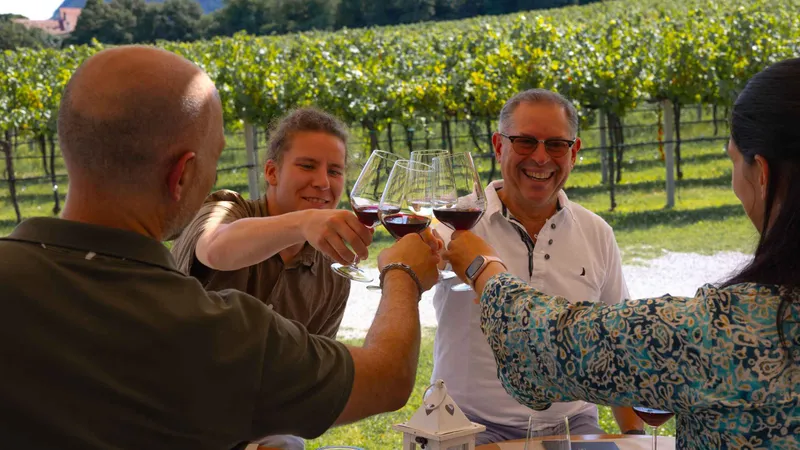 from $145.03
Euganean Hills Guided Wine Tour with Tasting From Padua
No-designated-driver solution for the Fior d'Arancio hills
Check AvailabilityPrices, ratings and details are the platform's own, checked in Q3 2026; dollar figures are the listed prices — the platform bills in your account's currency.
Frequently asked questions about the Verona day trip
How long is the ride, and do I need to reserve?
Regional trains take 70-90 minutes, run roughly hourly and use a fixed fare of about €8 each way with open seating — no reservation. Buy and validate on the day. Advance booking matters only for the opera festival, whose seats are sold separately by the Arena Foundation.
Can you see the Arena when there is no opera?
Yes — daytime visits run on most days outside the festival and in its gaps, for around €10. On opera days the daytime slots close early for rehearsals and set work, so check the day's hours on the official calendar before fixing the plan.
Is Juliet's balcony worth the crowd?
As a two-minute stop, yes: the courtyard is free to view from the arch, the photo takes ninety seconds and the surrounding lanes are pleasant. As a paid interior visit, only if you care about the museum layers. Go before 10:30 or after 17:00 and the queue shrinks from half an hour to minutes.
What can I see in Verona for free?
Plenty: Piazza Bra and the Arena's exterior, Verona's own market square with its frescoed facades, the Adige riverside and bridges, the Roman theatre from the far bank, and the Castel San Pietro terrace — the single best view over the bend costs only the climb.
How late do trains run back after an opera night?
The regional frequency thins in the evening and festival performances end late, so check the return timetable before buying tickets — some nights the last convenient train leaves before the encore. The practical options are an earlier exit, a hotel night in Verona during festival peaks, or planning the opera for a day when the morning start can be lazy.
Can I add Vicenza on the way back?
Yes — Vicenza sits on the same line 30 minutes out of Padua, so a stopover between Verona and home is a legitimate variation. Two Palladio hours fit between trains; the Vicenza day trip page has the two-hour version of the circuit.
Is Verona better than Venice for a single day?
Different, not better: Verona is flatter, cheaper and calmer, with one anchor monument and a walkable loop; the lagoon city is a larger production that rewards an early start. The side-by-side comparison — costs, rhythms, seasonality — sits in venice or verona.
What to pair with the Verona run
Three companions share the rail map with Verona, plus the comparison that most visitors eventually ask for:
Vicenza
Palladio's city on the same line, 30 minutes from Padua — the natural stopover.
Venice
The lagoon trip east: the other half of the great rail pairing.
Getting around Padua
Station drill, tickets and validation before you board westbound.
Venice or Verona day trip
The two flagship trips compared hour by hour.
Reviewed Q3 2026 (July–September 2026); next review Q4 2026. Prices, hours and terms are set by the venue or operator and confirmed at checkout.
We may earn a commission if you book through one of our links, at no extra cost to you. Full affiliate disclosure